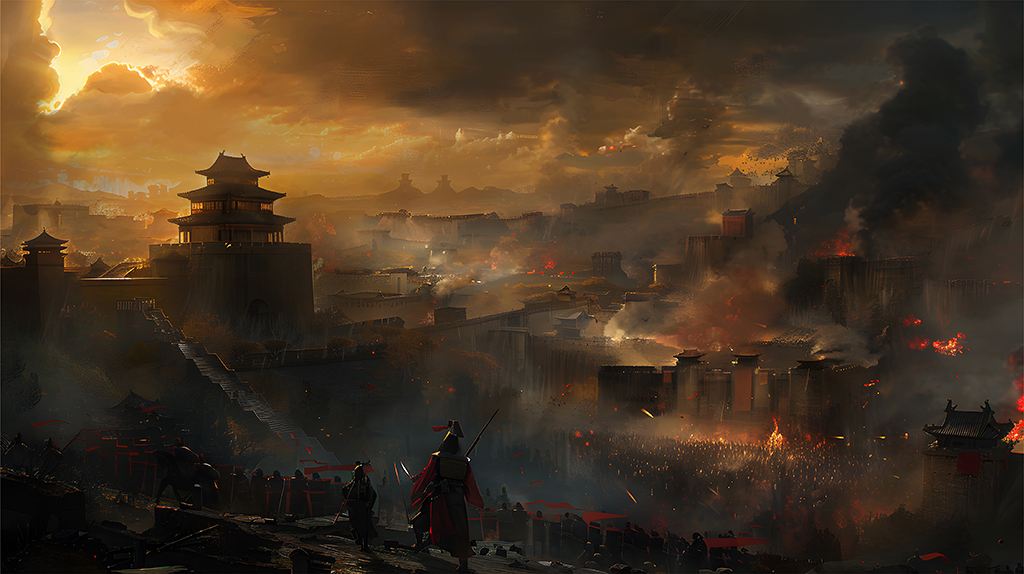
Song of the Swan Gate
Introduction
Song of the Swan Gate is a poem from the Tang Dynasty, written by the renowned poet Li He (790-816). The poem captures the intense emotions and drama surrounding the eve of a significant battle. Li He, known for his vivid and imaginative literary style, crafts a narrative that delves into the psyche and resolve of soldiers poised to defend their city against approaching forces.
Artistic influence
The poem inspired artist Liu Jingxi from Tianjin Academy of Fine Arts to create an illustration titled Song of the Swan Gate. In creating a visual counterpart to Li He's work, the artist employed large swathes of dark hues contrasted by scattered spots of fire. These elements serve to underline the urgency and gravity of the situation. The strategic use of color reflects the looming threat and the high stakes of the impending battle.
The depiction of sunset light piercing through thick clouds on the left side of the illustration adds a dramatic flair, symbolizing both the end of a day and the potential end of peace. This imagery is drawn directly from the original poem's phrase "golden scales," which metaphorically describes the gleaming armor of the soldiers. The golden light cast upon the soldiers’ armor not only matches this poetic description but also signifies the nobility and heroism of the troops as they stand ready to protect their city.
The central theme of the illustration aligns with Li He's portrayal of the soldiers’ spirit and readiness to confront their fate. The poem and its visual adaptation highlight the soldiers' bravery and the collective resolve to fight to the death if necessary, underscoring a deep patriotic sentiment. The artistic representation captures the essence of the soldiers’ emotional and physical preparation for battle, evoking a profound sense of duty and sacrifice.
Historical Context
The Tang Dynasty, during which Li He composed Song of the Swan Gate, was a period marked by both cultural flourishing and military challenges. This era is often celebrated for its advancements in literature, art, and technology, yet it was also characterized by frequent military conflicts. The poem reflects the dual nature of the Tang Dynasty—a time of great prosperity and significant martial endeavors.
Li He's works, including Song of the Swan Gate, are noted for their rich imagery and emotional depth, often exploring themes of heroism, loyalty, and the transient nature of life. His poetry remains influential, offering insights into the historical and cultural milieu of his time. The illustration, by capturing the essence of Li He's literary style, serves as a homage to the poet's lasting legacy and the enduring themes he explored.








